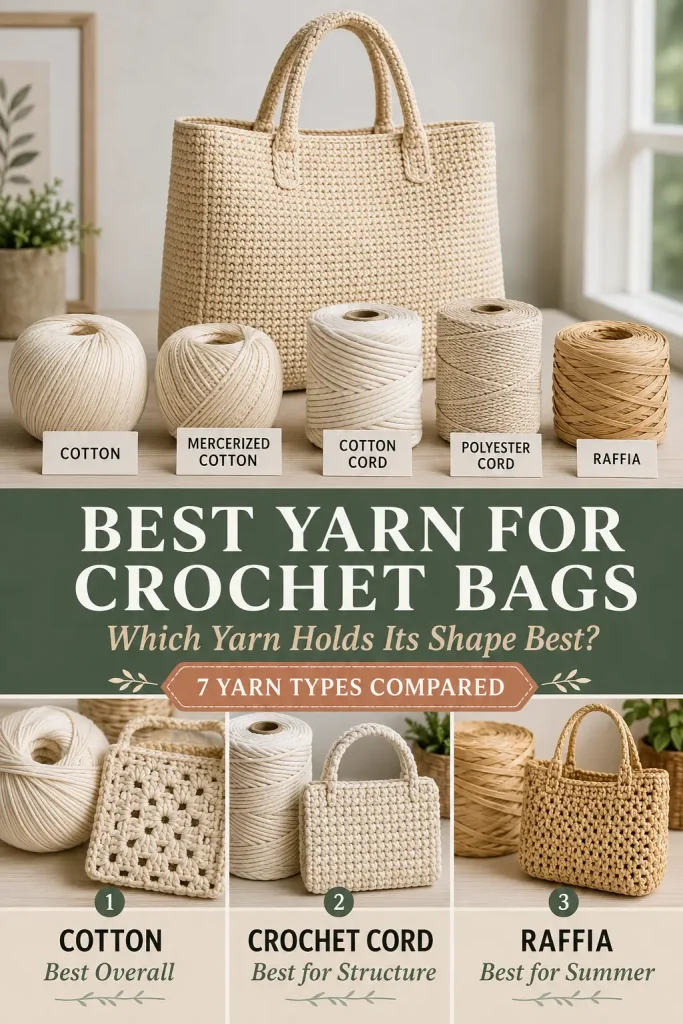
Crochet bags are beautiful, but the yarn you choose can completely change how the finished bag behaves. A tote that looks structured when you finish it can become long and stretched after carrying a phone, wallet, water bottle, or groceries for a few hours.
If you are planning a crochet market bag, granny square tote, summer handbag, flower bag, or structured crochet purse, choosing the right yarn before you start can save a lot of frustration.
For most crochet bags, you want yarn that has good stitch definition, limited stretch, enough strength for everyday use, and a texture that suits the type of bag you are making.
This guide compares the best yarn types for crochet bags so you can decide what to buy before starting your next project.
What Is the Best Yarn for Crochet Bags?
For most everyday crochet bags, cotton is the best all-around yarn choice.
Cotton creates defined stitches, has less bounce than many acrylic yarns, and generally holds the shape of a bag better under weight.
But cotton is not always the best choice for every design.
For example:
- Cotton works beautifully for granny square totes.
- Cotton cord is better for structured handbags.
- Raffia is excellent for lightweight summer bags.
- Polyester cord works well for firm modern bags.
- Cotton-acrylic blends can make softer everyday totes.
- Nylon or polyester yarn can be useful when strength and moisture resistance matter.
The best option depends on what you want the finished bag to do.
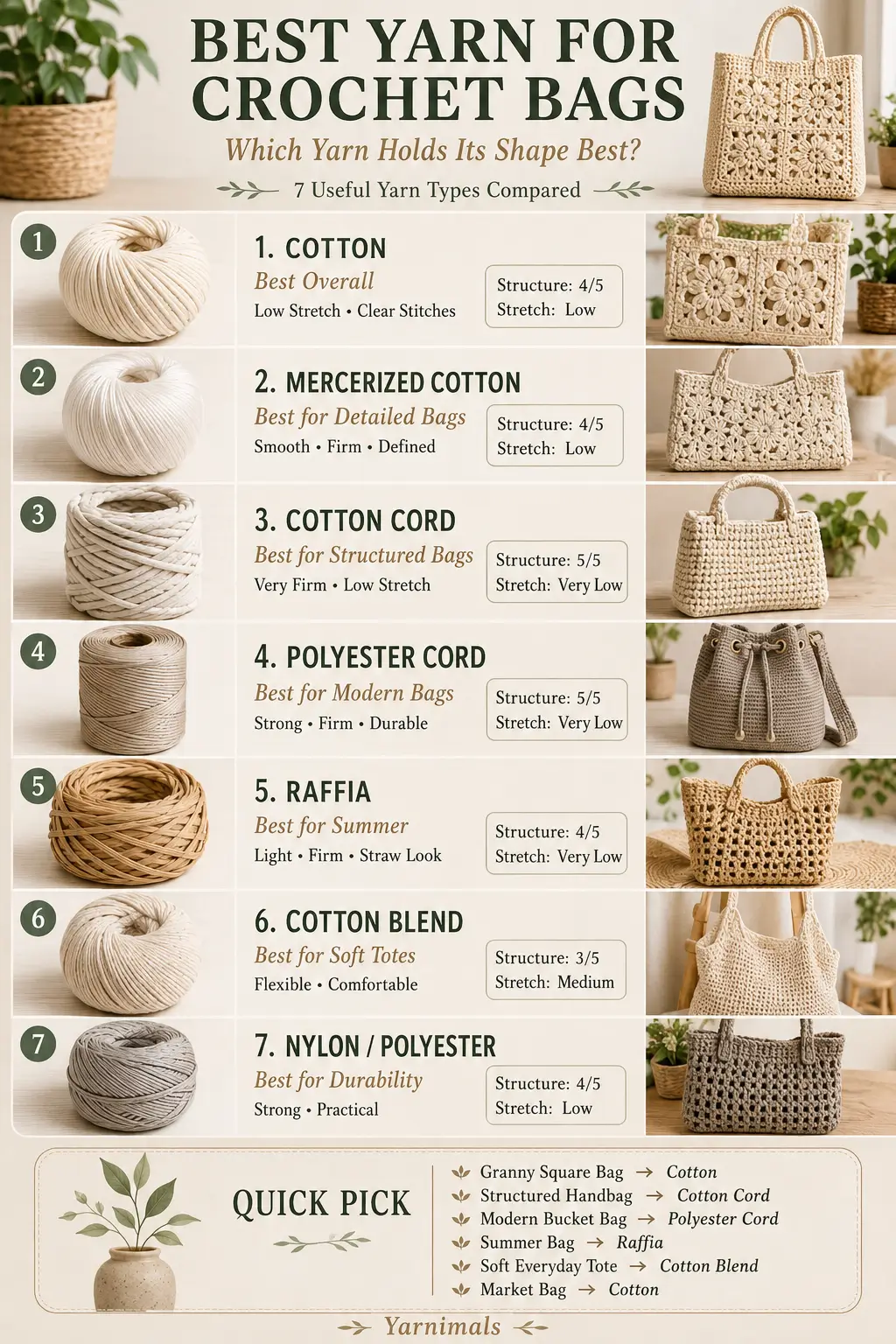
Quick Yarn Comparison for Crochet Bags
| Yarn Type | Structure | Stretch | Best For |
|---|---|---|---|
| Cotton | Medium to firm | Low | Granny square bags, totes, market bags |
| Mercerized Cotton | Firm | Low | Polished handbags and detailed bags |
| Cotton Cord | Very firm | Very low | Structured purses and bucket bags |
| Polyester Cord | Very firm | Very low | Modern handbags and baskets |
| Raffia | Firm | Very low | Summer and beach bags |
| Cotton-Acrylic Blend | Medium | Moderate | Soft everyday totes |
| Nylon/Polyester Yarn | Medium to firm | Low | Practical, durable bags |
1. Cotton Yarn: Best Overall Choice for Crochet Bags
If you want one dependable yarn type for crochet bags, start with cotton.
Cotton has enough structure to help a tote keep its shape while still being comfortable to crochet. It also creates clean stitch definition, which is especially important for decorative bags.
Cotton works particularly well for:
- crochet market bags
- granny square totes
- floral crochet bags
- beach bags
- striped totes
- crochet shoulder bags
- mesh shopping bags
A medium-weight cotton yarn is a particularly versatile choice because it is substantial without creating an excessively heavy finished bag.
Why Cotton Works So Well
Cotton fibers do not have the same springy elasticity as many acrylic and wool yarns.
That means a cotton crochet panel usually stays closer to its original dimensions when weight is added.
This matters for a bag because the contents are constantly pulling downward.
The trade-off is that cotton itself can become heavy, especially in a large densely crocheted bag.
For a very large tote, consider a lighter cotton yarn or a more open stitch pattern.
2. Mercerized Cotton: Best for a Polished Crochet Handbag
Mercerized cotton is a great choice when you want a crochet bag to look more refined.
It usually has:
- smooth fibers
- excellent stitch definition
- a slight sheen
- strong color clarity
- a firmer finished appearance
It works beautifully for intricate granny squares, geometric motifs, floral squares, and bags where every stitch is meant to be visible.
Consider mercerized cotton for:
- elegant shoulder bags
- detailed granny square handbags
- colorful motif bags
- small purses
- structured summer handbags
If you are making a bag with decorative flowers or detailed stitchwork, the clean surface can make those details stand out.
3. Cotton Cord: Best for Structured Crochet Bags
For a crochet bag that needs to stand upright on its own, cotton cord is one of the strongest options.
Instead of behaving like traditional soft yarn, crochet cord creates a thicker and firmer fabric.
This makes it ideal for:
- bucket bags
- basket-style bags
- structured handbags
- small purses
- cosmetic bags
- sturdy tote bases
A cord between approximately 2 and 4 mm is useful for many crochet bag projects, depending on how stiff you want the finished fabric.
When Cotton Cord May Not Be Ideal
Cord is heavier and can be harder on your hands than standard yarn.
A large shoulder tote worked entirely in thick cord may become surprisingly heavy before you put anything inside.
For that reason, cord is often better for small or medium structured bags than oversized totes.
4. Polyester Cord: Best for Firm Modern Bags
Polyester crochet cord is another good option for bags that need substantial structure.
It is particularly useful for modern designs with:
- dense single crochet
- clean geometric shapes
- bucket constructions
- firm bases
- structured sides
Polyester fibers generally absorb much less moisture than cotton, which can also make the material practical for accessories that may occasionally be exposed to damp conditions.
The texture can vary significantly between cords, so look for a smooth cord that bends comfortably around your crochet hook.
5. Raffia: Best for Summer Crochet Bags
If you love the boutique look of woven summer handbags, raffia is worth considering.
Crochet raffia creates a firm, lightweight-looking fabric with a natural straw-like texture.
It is especially attractive for:
- beach bags
- summer totes
- vacation handbags
- sun hats and matching bags
- market totes
- resort-style crochet accessories
Natural shades such as sand, cream, caramel, and straw create a classic summer appearance.
Colored raffia can produce a much more modern result.
Is Raffia Easy to Crochet?
It can take a little adjustment.
Raffia has less softness and elasticity than ordinary yarn, so maintaining comfortable hand tension is important.
A smooth crochet hook and slightly relaxed grip can make a noticeable difference.
6. Cotton-Acrylic Blend: Best for a Softer Everyday Tote
Not every crochet bag needs to be rigid.
If you want a softer shoulder bag that drapes naturally against the body, a cotton-acrylic blend can be a good compromise.
The cotton contributes structure while the acrylic adds softness and flexibility.
This works well for:
- casual shoulder bags
- granny square totes
- soft flower bags
- lightweight handbags
- foldable shopping bags
The main consideration is stretch.
A blend containing a large amount of acrylic may stretch more under weight than pure cotton.
For a bag carrying heavier items, adding a fabric lining can solve much of this problem.
7. Nylon or Polyester Yarn: Best for Strength and Practical Use
Synthetic yarns such as nylon and certain polyester yarns can work well when durability is more important than a traditional soft-yarn feel.
These fibers may be useful for:
- everyday utility bags
- compact crossbody bags
- outdoor accessories
- washable totes
- bag straps
- reinforced bases
They are also useful when you want a bag that does not readily absorb moisture.
Look for yarn that has a firm twist rather than an extremely soft fluffy construction.
Best Yarn for a Crochet Market Bag
For a classic reusable crochet market bag, I would choose cotton yarn.
Market bags need to be:
- strong
- washable
- reasonably lightweight
- comfortable to carry
- resistant to excessive stretching
A medium-weight cotton is suitable for a more substantial market tote.
For a lightweight mesh market bag, a thinner cotton can keep the finished project from becoming too heavy.
If your pattern uses large mesh openings, remember that the stitch pattern itself will stretch even when the yarn has very little elasticity.
Best Yarn for a Granny Square Bag
Cotton is also one of the best choices for granny square bags.
Granny square bags depend heavily on crisp motif shapes and strong seams.
Cotton helps the squares remain defined after blocking and makes decorative details easier to see.
For floral granny squares, a smooth cotton is particularly useful because dimensional petals remain visible instead of disappearing into fuzzy fibers.
Choose coordinated colors with similar yarn thickness so every square finishes at approximately the same size.
Best Yarn for a Crochet Beach Bag
For a beach-style crochet bag, there are several strong options.
Cotton
Best for traditional crochet texture and colorful designs.
Raffia
Best for a fashionable straw-bag appearance.
Polyester Cord
Best for a more structured bag that may encounter damp conditions.
Cotton-Polyester Blend
A useful compromise when you want crochet softness with additional practicality.
If the bag will carry wet towels or swimwear, consider adding a removable washable liner or internal pouch.
Best Yarn for a Structured Crochet Handbag
If the goal is a bag that holds an obvious shape rather than collapsing, choose:
cotton cord or polyester cord.
A dense stitch such as single crochet further increases the structure.
For even more firmness, you can combine the yarn choice with:
- a reinforced base
- fabric lining
- bag bottom insert
- reinforced handles
- tighter gauge
The yarn is important, but construction matters too.
Best Yarn for Crochet Flower Bags
Flower bags are especially popular because the yarn needs to do two jobs at once.
It must provide structure for the bag while also showing the flower details clearly.
For this reason, smooth cotton is one of the strongest choices.
It works beautifully for:
- daisy granny squares
- 3D flower squares
- sunflower bags
- floral market totes
- raised petal motifs
Avoid extremely fuzzy yarn for detailed flowers because it can hide the petal definition.
Yarn Weight Matters Too
The fiber is only part of the decision.
Yarn weight dramatically affects the finished bag.
DK Yarn
Good for:
- lightweight summer bags
- smaller motifs
- detailed granny squares
- delicate handbags
Worsted Weight Yarn
Good for:
- everyday totes
- market bags
- granny square bags
- floral bags
This is probably the most versatile range for general crochet bag making.
Bulky Yarn or Cord
Good for:
- structured handbags
- chunky totes
- basket-style bags
The finished project works up quickly but can become heavier.
What Yarn Should You Avoid for Crochet Bags?
There is no yarn that can never be used for a bag, but some yarns require extra consideration.
Very Stretchy Acrylic
Soft acrylic can stretch significantly when a bag is loaded.
If you love the color or softness, consider adding a lining.
Plush or Chenille Yarn
Chenille is wonderful for blankets and plush toys, but it is usually not my first choice for an everyday bag.
The soft fibers can hide stitch definition and may not provide enough structure.
Very Fuzzy Yarn
Fuzzy yarn can make decorative crochet motifs difficult to see and may create less-defined seams.
Delicate Wool
Wool can make a beautiful bag, but friction and repeated handling may eventually affect the surface.
If you choose wool, think about how frequently the bag will be used.
How Much Yarn Do You Need for a Crochet Bag?
The amount depends heavily on yarn weight, stitch density, bag size, and handles.
As a broad planning guide:
Small Purse
Approximately 150–250 g
Medium Shoulder Bag
Approximately 250–400 g
Granny Square Tote
Approximately 350–550 g
Large Market Tote
Approximately 400–700 g
Dense stitches consume more yarn than open mesh.
Long crochet handles also use more yarn than many people expect.
When possible, purchase a little more than your estimated requirement, especially when matching dye lots matters.
Should You Line a Crochet Bag?
A lining is not mandatory, but it can dramatically improve the performance of a crochet bag.
A lining can:
- reduce stretching
- prevent small objects falling through stitches
- protect the crochet fabric
- support heavy contents
- make the bag feel more finished
- help the bag retain its original shape
I particularly recommend lining granny square bags and bags with openwork stitches if they will be used regularly.
Which Crochet Stitch Makes the Strongest Bag?
For maximum structure, dense stitches usually work best.
Good options include:
- single crochet
- waistcoat stitch
- thermal stitch
- tightly worked half double crochet
- dense textured stitches
Open granny stitches and mesh patterns create beautiful lightweight bags, but they naturally provide less structure.
You can compensate with cotton yarn, strong seams, and lining.
What Hook Size Should You Use for Crochet Bags?
Do not automatically assume the largest hook recommended on the yarn label will make the best bag.
For bags, a slightly firmer gauge can be useful.
For example, if a yarn comfortably works with several hook sizes, choosing the smaller end of that range can create a denser fabric.
The hook should still move easily through the stitches.
If your hands are struggling or the fabric feels like cardboard, the hook is probably too small.
How to Stop Crochet Bag Handles from Stretching
Handles often stretch before the bag body does.
You can reduce this by:
- using cotton or low-stretch cord
- crocheting the straps with a dense stitch
- making straps slightly shorter than the final desired length
- adding several rows instead of using a single chain
- sewing straps deeply into the bag body
- reinforcing the inside attachment points
- adding cotton webbing inside the crochet strap for heavy bags
Do not attach a heavy tote handle to only one row of crochet.
Spread the load across several rows.
My Favorite Yarn Choice by Bag Type
If I were choosing yarn specifically by project, I would use:
Granny Square Tote
Smooth cotton.
Floral Market Bag
Cotton or mercerized cotton.
Structured Handbag
Cotton cord.
Modern Bucket Bag
Polyester cord.
Beach Tote
Cotton or raffia.
Lightweight Summer Bag
DK cotton.
Soft Everyday Shoulder Bag
Cotton-acrylic blend.
Mesh Grocery Bag
Light to medium-weight cotton.
What to Look for Before Buying Yarn for a Bag
Before placing yarn in your cart, check these five things.
1. Fiber
Choose a fiber appropriate for the amount of structure you need.
2. Yarn Weight
Make sure it matches the size and thickness you want for the finished bag.
3. Yardage
Compare meters or yards per ball rather than only comparing ball weight.
Two 100 g yarns can contain very different lengths.
4. Care Instructions
For an everyday tote or market bag, easy washing is valuable.
5. Color Availability
If your bag contains many granny squares or flowers, check that all required colors are available in the same yarn line and weight.
FAQ
Is cotton or acrylic better for crochet bags?
For most functional crochet bags, cotton is usually the better option because it generally has less stretch and better stitch definition. Acrylic can still work well for softer bags, especially when a fabric lining is added.
What yarn makes a crochet bag stiff?
Cotton cord and polyester cord are excellent choices when you want a firm, structured bag. Dense crochet stitches and a slightly tighter gauge can add even more structure.
What is the best yarn for a crochet market bag?
A durable cotton yarn is a reliable choice for reusable market bags because it provides strength, stitch definition, and relatively low stretch.
Conclusion
The best yarn for a crochet bag depends on the finished style you want, but cotton remains one of the safest all-around choices.
Choose regular or mercerized cotton for granny square bags and market totes, cotton or polyester cord for structured handbags, and raffia when you want a lightweight summer look.
More importantly, match the yarn to the job the bag needs to perform. A soft granny square shoulder bag and a firm bucket purse need very different materials.
Taking a few minutes to choose the right yarn before you start can be the difference between a crochet bag that stretches after one outing and one that keeps looking beautiful through regular use.

Every pattern I see of yours I want to make. You are very generous with your time and creativity.
Thank you very much for what you do. You are a gem.
Thank you, very kind words from you!